
Exploratory Testing with BesTest
Combine human creativity with structured investigation to find defects that scripted tests miss.
BesTest supports exploratory testing alongside scripted tests in the same cycle. Create charter-based test cases, use the test player to capture findings as you go, and link discovered defects back to requirements so nothing falls through the cracks.
Implement Exploratory Testing with BesTest
Define a test charter
Create a test case in BesTest with a charter as the name - something like "Explore the payment flow with expired credit cards" - and set its type to Exploratory. Add the goal and scope in the description. Keep steps loose: "Attempt checkout with various expired card states" rather than prescriptive click-by-click instructions. The charter gives direction without constraining investigation.
Create a test case with flexible steps
Add a few high-level steps that define areas to probe, not exact sequences to follow. For example: "1. Try boundary values on quantity fields, 2. Test with different user roles, 3. Explore error handling on network timeout." Each step is a prompt for investigation, not a script to replay.
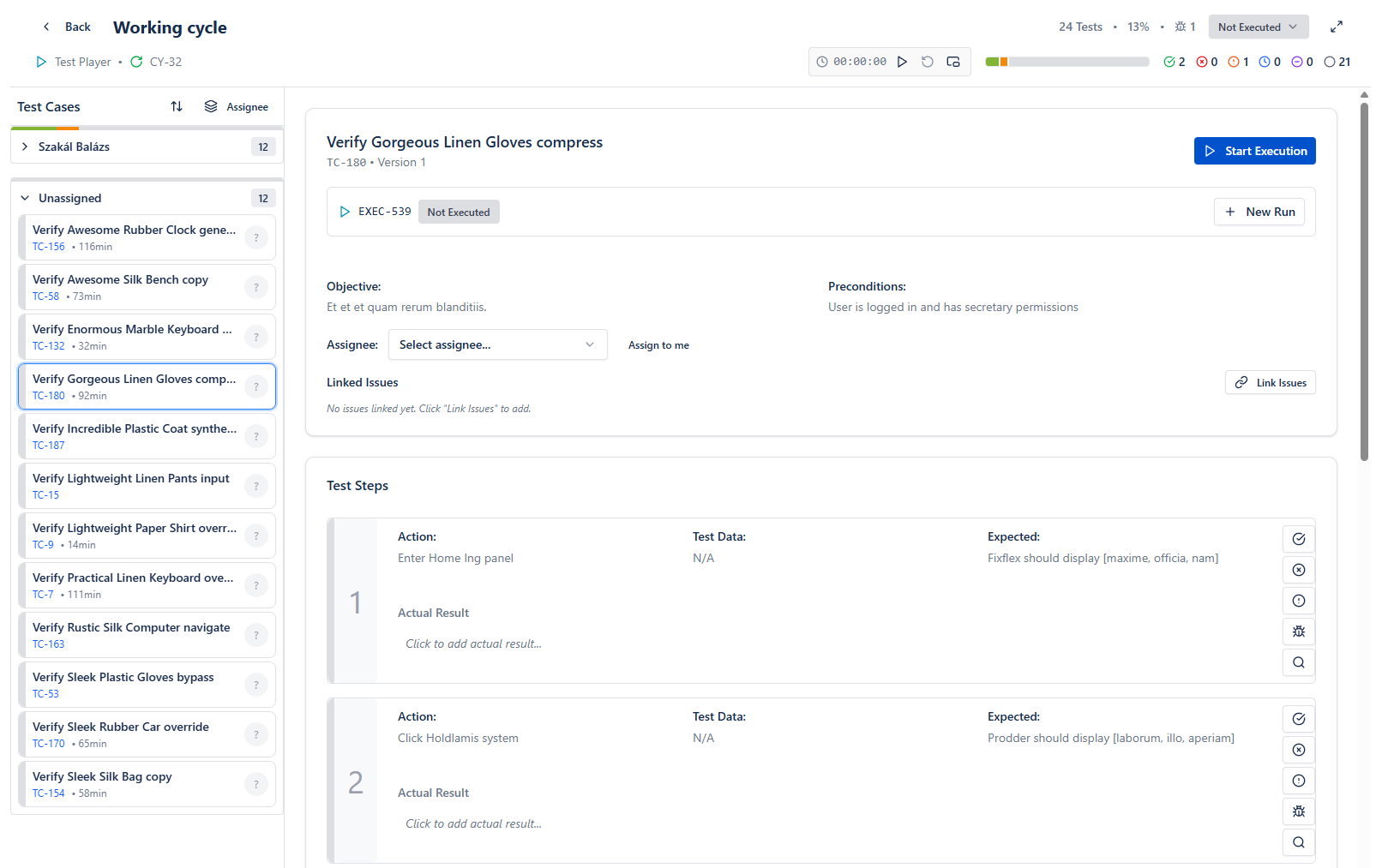
Use the test player to capture findings as you go
Open the Test Player and step through your charter. Mark steps as pass, fail, or blocked based on what you discover, and write the actual result on each step - what you tried, what happened, what felt fragile. The built-in timer records how long the session took. The player captures your findings in a structured format even though the testing itself is unscripted.
Log defects directly from execution
When you find a bug during exploration, create it from the Test Player: Jira's create form opens pre-filled with the test case, the step and its expected and actual result, and the new issue is linked to the run. Through the test case, it traces back to the requirement it covers. Attach screenshots to the Jira issue (BesTest itself does not store attachments). The traceability chain is preserved automatically.
Add successful explorations to regression collections
After an exploratory session uncovers a real risk area, turn the charter into a more detailed scripted test case, set its type to Regression and file it where your regression collection's rules look (or link it to the requirement it protects). Future regression cycles will include this test automatically. Exploratory testing feeds your scripted suite - each discovery makes your test coverage stronger.
Built for Exploratory Testing
Test cycles can include both scripted test cases and exploratory charters, so teams run balanced cycles without needing separate tools or tracking systems.
The Test Player captures step-level results, actual results and timing during exploration, preserving findings in a structured format that can be reviewed and shared.
Creating linked Jira issues from the execution context connects defects back to requirements through BesTest's traceability model - so the team sees which requirement a bug affects and its significance.
The coverage model highlights Critical and High requirements that are Partly covered or Not covered - natural targets for exploratory sessions where scripted tests have not yet been written.
Related Resources
- How to Write Test Cases: The Complete 2026 GuideGuide
- Test Case Review: Best Practices for Quality AssuranceGuide
- Why Storing Test Cases as Jira Issues Slows Down Your TeamGuide
- Smoke Testing in JiraUse case
- User Acceptance Testing (UAT) in JiraUse case
- Sprint Testing in JiraUse case
- Exploratory TestingDefinition
- Test CaseDefinition
- Defect (Bug)Definition
- Test ExecutionDefinition
- Test ScenarioDefinition
- Test DataDefinition
- Smoke TestingDefinition
Ready to try BesTest?
Apply exploratory testing with a tool that supports your methodology natively inside Jira. Free for up to 10 users.
Get BesTest Free