
Shift-Left Testing
Move testing activities earlier in the development lifecycle - catching defects when they are cheapest to fix.
BesTest makes shift-left practical: create and approve requirements before development starts, write and review test cases during sprint planning, and track coverage gaps while the story is still being built - not after.
Implement Shift-Left Testing with BesTest
Create requirements before development starts
During backlog refinement, create requirements from the BesTest panel on the Jira story (several at once if you like), so they are linked from the start. Set impact and complexity so the significance is established early, then send the requirements for review: a reviewer approves them or requests changes before anyone builds or tests against them. This forces the team to agree what "done" looks like before writing a line of code.
Write test cases during sprint planning
While the story is being estimated, write test cases with preconditions, numbered steps and expected results (or Given / When / Then in the BDD editor). Create them from the requirement's Traceability card so each is linked to the requirement it validates. Writing tests now - before implementation - surfaces ambiguities in the acceptance criteria that would otherwise become mid-sprint surprises.
Submit test cases for review before execution
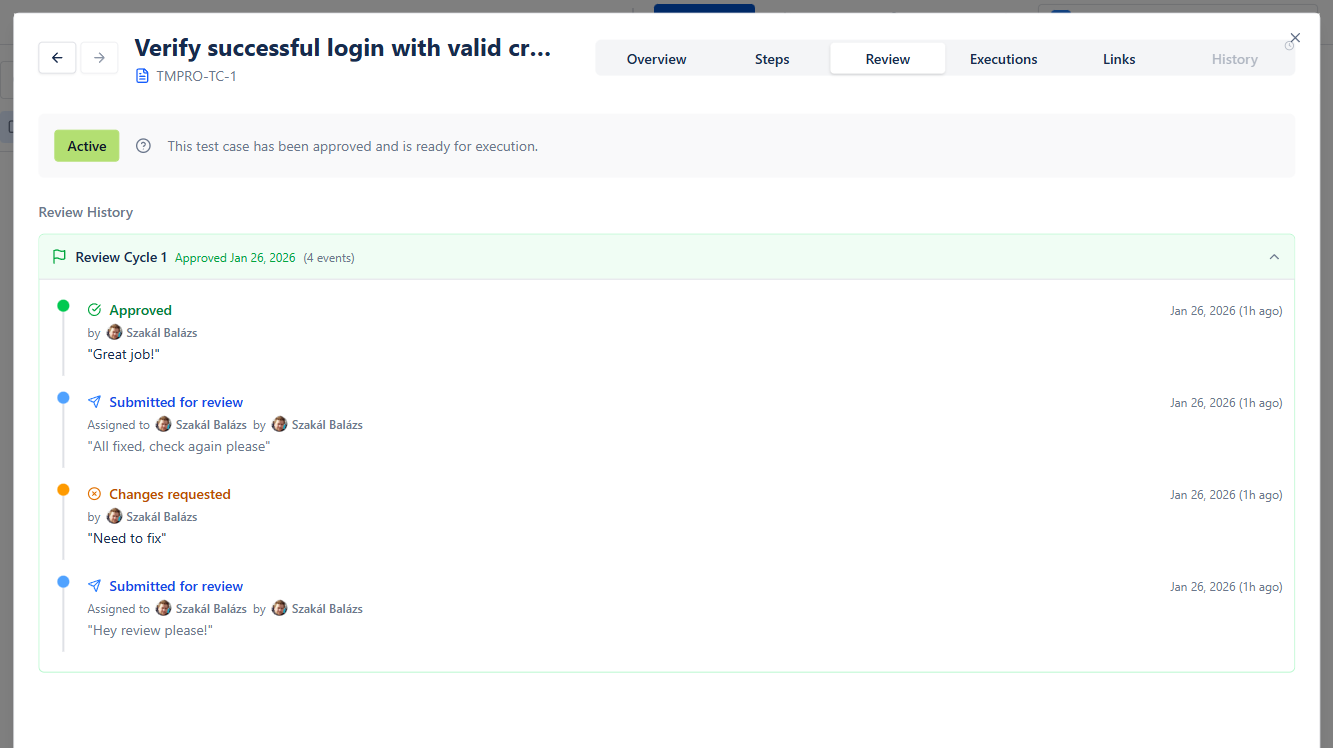
Use BesTest's review workflow: submit the test case, then have a developer or PO review it. They can request changes (with comments) or approve, and every round is kept in the review audit trail. This catches coverage gaps and misunderstandings while the story is still in development - not during UAT.
Link test cases to stories early
Use the BesTest panel on the Jira work item to link test cases before the sprint starts. The requirement's Coverage card updates in real time ("Test cases: 3 linked of 5 needed"), showing whether it is Covered, Partly covered or Not covered for its significance. Developers can see the test plan right on the story while they code.
Track coverage gaps during development
Check coverage during the sprint: the Coverage filter in the requirements catalog, or the coverage gadgets on your Jira dashboard. Critical and High requirements that are only Partly covered are visible at a glance. Address gaps while the developer still has context on the story - not two sprints later when everyone has forgotten the implementation details.
Built for Shift-Left Testing
The same review workflow (submit, request changes, approve) works for requirements and test cases, so specs are signed off before tests are written and tests are checked before execution.
Test cases link directly to requirements, so teams can start building coverage as soon as requirements are defined - the Coverage card shows where each requirement stands in real time.
The significance-based coverage model highlights under-covered requirements before any tests are executed, making gaps visible during sprint planning instead of mid-sprint.
Structured test cases with preconditions, numbered steps, and expected results encourage thorough scenario design early, turning test cases into living specifications.
Free for up to 10 users with one-click enablement - no procurement delay, so teams can start designing tests early without waiting for budget approval.
Related Resources
- Test Case Review: Best Practices for Quality AssuranceGuide
- How to Write Test Cases: The Complete 2026 GuideGuide
- Test Case Review WorkflowUse case
- Sprint Testing in JiraUse case
- User Acceptance Testing (UAT) in JiraUse case
- Test CaseDefinition
- PreconditionDefinition
- Expected ResultDefinition
- Requirements TraceabilityDefinition
- Test CoverageDefinition
- Acceptance CriteriaDefinition
- Test PlanDefinition
Ready to try BesTest?
Apply shift-left testing with a tool that supports your methodology natively inside Jira. Free for up to 10 users.
Get BesTest Free