
The UAT Test Plan Template (Copy-Paste Ready)
A UAT test plan is the document that defines what business users will test before a release goes live, who tests it, when, and what "done" means. This is a complete UAT test plan template covering all ten sections a plan needs: overview, entry/exit criteria, environment, schedule, roles, test cases, defect management, sign-off, and risks. Copy the block below straight into Word, Google Docs, Confluence, or your wiki and replace the bracketed placeholders. Everything after it on this page explains how to fill in each section, followed by a fully worked example.
Prefer to fill it in as a form? The free UAT Test Plan Generator assembles this exact document interactively in your browser and exports it as Word, Markdown, or PDF - no signup needed.
====================================================
                  UAT TEST PLAN
====================================================

1. PLAN OVERVIEW
----------------------------------------------------
Project Name:       [Project and release version]
UAT Plan Version:   [1.0]
Prepared By:        [Name, role]
Date:               [YYYY-MM-DD]
Status:             [Draft / Under review / Approved]
Distribution:       [Teams and stakeholders who receive this plan]

Objective:
[What this UAT cycle validates, referencing the requirement
or story IDs in scope]

In Scope:
- [Feature / module]
- [Feature / module]

Out of Scope:
- [Excluded item - note why, or where it is covered instead]

2. ENTRY CRITERIA (testing starts only when ALL are met)
----------------------------------------------------
[ ] All in-scope user stories have passed QA testing
[ ] UAT environment deployed with the release candidate build
[ ] Test data loaded and verified
[ ] All critical and high-severity QA defects resolved
[ ] UAT test cases reviewed and approved by business stakeholders
[ ] All UAT testers have environment access and credentials
[ ] Rollback procedure documented and verified

3. EXIT CRITERIA (UAT is complete when ALL are met)
----------------------------------------------------
[ ] 100% of UAT test cases executed
[ ] Pass rate at or above [95]%
[ ] Zero open Critical or High severity defects
[ ] All Medium severity defects triaged (fix, defer, or accept)
[ ] Formal sign-off received from business stakeholders
[ ] UAT summary report generated and distributed

4. TEST ENVIRONMENT
----------------------------------------------------
Environment URL:    [https://uat.example.com]
Test Data:          [Source, e.g. anonymized production snapshot + date]
Browser Support:    [Browsers and minimum versions]
Integrations:       [Third-party systems and mode, e.g. sandbox]
Test Accounts:      [Where credentials are documented]
Data Refresh:       [Schedule, e.g. nightly reset to baseline]
Freeze Policy:      [No deployments during testing without approval]

5. UAT SCHEDULE
----------------------------------------------------
| Phase                          | Start  | End    |
|--------------------------------|--------|--------|
| Environment setup              | [Date] | [Date] |
| Tester briefing / walkthrough  | [Date] | [Date] |
| Execution - Round 1            | [Date] | [Date] |
| Defect triage and fixes        | [Date] | [Date] |
| Execution - Round 2 (re-test)  | [Date] | [Date] |
| Sign-off and report            | [Date] | [Date] |
| Buffer                         | [Date] | [Date] |

Daily triage meeting: [Time, channel]

6. ROLES AND RESPONSIBILITIES
----------------------------------------------------
| Role            | Name   | Responsibilities                     |
|-----------------|--------|--------------------------------------|
| UAT Lead        | [Name] | Plan, coordinate, track, report      |
| Product Owner   | [Name] | Acceptance criteria, priorities,     |
|                 |        | sign-off                             |
| Business Tester | [Name] | Execute test cases [IDs / area]      |
| QA Support      | [Name] | Environment, defect logging support, |
|                 |        | test data                            |
| Dev Lead        | [Name] | Defect investigation and fixes       |
| Project Manager | [Name] | Communication, schedule, escalation  |

7. TEST CASE SUMMARY
----------------------------------------------------
| ID       | Title             | Priority | Assigned To | Requirement |
|----------|-------------------|----------|-------------|-------------|
| [TC-001] | [Test case title] | [High]   | [Name]      | [REQ-ID]    |
| [TC-002] | [Test case title] | [Medium] | [Name]      | [REQ-ID]    |

Total test cases: [N] across [N] functional areas
Priority distribution: [N] Critical / [N] High / [N] Medium / [N] Low

8. DEFECT MANAGEMENT
----------------------------------------------------
Logging: [Where defects are logged; each report includes summary,
steps to reproduce, expected vs. actual result, severity]

Severity levels and target resolution:
- Critical: workflow blocked, no workaround     - [24 hours]
- High:     major feature broken                - [48 hours]
- Medium:   works with issues                   - [fix or defer
                                                  before sign-off]
- Low:      cosmetic                            - [defer with
                                                  approval]

Escalation: [When and to whom unresolved defects escalate;
who decides severity disputes]

9. SIGN-OFF
----------------------------------------------------
| Stakeholder | Role   | Decision      | Date   | Comments |
|-------------|--------|---------------|--------|----------|
| [Name]      | [Role] | [Pending]     | [Date] |          |
| [Name]      | [Role] | [Pending]     | [Date] |          |

Decision options: Approved / Approved with conditions / Rejected
Procedure: [Who distributes the summary report, how approvals
are recorded, where the final document is filed]

10. RISKS AND MITIGATION
----------------------------------------------------
| Risk   | Impact   | Likelihood | Mitigation |
|--------|----------|------------|------------|
| [Risk] | [Impact] | [Med] | [Plan] |The template is plain text on purpose - it pastes cleanly into Word, Google Docs, Confluence, Notion, or a wiki page, and the tables map directly to Excel if you prefer a spreadsheet for the test case summary.
How to Fill In Each Section
A quick guide to what good looks like in each of the ten sections.
Plan Overview
State the objective in terms of business outcomes and reference the requirement or story IDs in scope. List out-of-scope items explicitly - an unwritten exclusion always resurfaces as a dispute during sign-off.
Entry Criteria
This is your gate against starting UAT on an unstable build. If business users hit bugs QA should have caught, they lose confidence in the process and become reluctant to participate next time. Every box must be checked before execution starts - no exceptions.
Exit Criteria
Make them measurable. "Stakeholders are satisfied" is not an exit criterion; "95% pass rate, zero open Critical or High defects, all Medium defects triaged" is. Agreeing on thresholds before testing starts prevents the "are we done yet?" loop at the end.
Test Environment
Use a dedicated environment, not a shared staging server where developers deploy mid-test. Document the data source and refresh schedule, and state the freeze policy in writing: no deployments during active testing without UAT Lead approval.
UAT Schedule
Plan two execution rounds with a triage-and-fix window between them, plus buffer days. Business testers have day jobs, so block actual calendar time for testing sessions - assigned tests without scheduled time end in a last-minute scramble.
Roles and Responsibilities
Name real people, not teams. Every test case needs an owner, and the Product Owner needs explicit authority over defect priorities and the final sign-off decision.
Test Case Summary
Write test cases in business language ("Create an invoice for a UK customer, verify tax shows 20% of subtotal"), assign a priority to every case, and trace each one to a requirement so you can prove coverage.
Defect Management
Define severity levels with target resolution times and an escalation path before the first defect appears. Decide up front who arbitrates severity disputes - usually the Product Owner.
Sign-Off
Identify approvers at the start of UAT, not the end. Include the three decision options (approved, approved with conditions, rejected) so a release with documented deferred items is a legitimate outcome rather than an awkward compromise.
Risks and Mitigation
Tester availability is the number one UAT risk - month-end close, holidays, and competing priorities sink more UAT cycles than software defects do. Name backup testers and schedule around known busy periods.
Filled-In Example: Horizon Billing Module
Here is the same template filled in for a fictional mid-size release - Horizon Billing Module v3.2 - so you can see how a finished UAT test plan reads.
Plan Overview
| Field | Details |
|---|---|
| Project Name | Horizon Billing Module v3.2 |
| UAT Plan Version | 1.0 |
| Prepared By | Sarah Chen, QA Lead |
| Date | 2026-04-07 |
| Status | Approved |
| Distribution | QA Team, Product Owner, Finance Team, Project Manager |
Objective: Validate that the Billing Module v3.2 release meets all business requirements defined in PROJ-201 through PROJ-215, with particular focus on multi-currency invoice generation, automated tax calculations, and the new payment reconciliation workflow.
Scope:
- •In scope: Invoice creation, tax calculation, payment reconciliation, billing dashboard, PDF export
- •Out of scope: Payment gateway integration (tested separately by partner team), historical data migration (covered in separate migration test plan)
Entry Criteria
Testing begins only when ALL of the following are met:
- •[ ] All user stories in the release scope have passed QA testing
- •[ ] The UAT environment is deployed with the release candidate build
- •[ ] Test data has been loaded (anonymized production data set v12)
- •[ ] All critical and high-severity QA defects are resolved
- •[ ] UAT test cases have been reviewed and approved by business stakeholders
- •[ ] All UAT testers have environment access and credentials
- •[ ] Rollback procedure has been documented and verified
Exit Criteria
UAT is complete when ALL of the following are met:
- •[ ] 100% of UAT test cases have been executed
- •[ ] Pass rate is 95% or higher
- •[ ] Zero open Critical or High severity defects
- •[ ] All Medium severity defects have been triaged (fix, defer, or accept)
- •[ ] Business stakeholders have provided formal sign-off
- •[ ] UAT summary report has been generated and distributed
Test Environment
| Component | Details |
|---|---|
| Environment URL | https://uat.horizon-app.example.com |
| Database | Anonymized production snapshot (2026-03-28) |
| Browser Support | Chrome 120+, Firefox 115+, Edge 120+ |
| Third-party Integrations | Tax API (sandbox mode), Email service (test mailbox) |
| Test Accounts | See Appendix A for credentials |
| Data Refresh Schedule | Nightly at 02:00 UTC (resets to baseline) |
No code deployments to the UAT environment during active testing without QA Lead approval. Hotfixes require re-execution of affected test cases.
UAT Schedule
| Phase | Start Date | End Date | Duration |
|---|---|---|---|
| UAT environment setup | Apr 14 | Apr 15 | 2 days |
| Tester briefing and walkthrough | Apr 16 | Apr 16 | 1 day |
| UAT execution - Round 1 | Apr 17 | Apr 23 | 5 days |
| Defect triage and fixes | Apr 24 | Apr 25 | 2 days |
| UAT execution - Round 2 (re-test) | Apr 28 | Apr 29 | 2 days |
| Sign-off and report | Apr 30 | Apr 30 | 1 day |
| Buffer | May 1 | May 2 | 2 days |
Total UAT window: 15 business days
Daily triage meeting: 09:30-10:00 UTC, Teams channel "Billing UAT"
Roles and Responsibilities
| Role | Name | Responsibilities |
|---|---|---|
| UAT Lead | Sarah Chen | Plan, coordinate, track progress, report status |
| Product Owner | James Park | Define acceptance criteria, prioritize defects, provide sign-off |
| Business Tester - Finance | Maria Lopez | Execute invoice and tax test cases (TC-001 through TC-025) |
| Business Tester - Accounting | David Kim | Execute reconciliation and reporting test cases (TC-026 through TC-040) |
| Business Tester - Operations | Lisa Wang | Execute billing dashboard and export test cases (TC-041 through TC-055) |
| QA Support | Tom Nguyen | Environment support, defect logging assistance, test data management |
| Dev Lead | Priya Sharma | Defect investigation and resolution |
| Project Manager | Alex Jordan | Stakeholder communication, schedule management, escalation |
Test Case Summary
| Test Case ID | Title | Priority | Assigned To | Requirement |
|---|---|---|---|---|
| TC-001 | Create invoice with single line item | High | Maria Lopez | PROJ-201 |
| TC-002 | Create invoice with multiple line items and discount | High | Maria Lopez | PROJ-201 |
| TC-003 | Multi-currency invoice (EUR to USD conversion) | Critical | Maria Lopez | PROJ-203 |
| TC-004 | Tax calculation - standard VAT 20% | Critical | Maria Lopez | PROJ-205 |
| TC-005 | Tax calculation - reduced rate items | High | Maria Lopez | PROJ-205 |
| TC-006 | Tax calculation - tax-exempt customer | Medium | Maria Lopez | PROJ-205 |
| TC-007 | Invoice PDF export with correct formatting | High | Maria Lopez | PROJ-208 |
| TC-026 | Payment reconciliation - exact match | Critical | David Kim | PROJ-210 |
| TC-027 | Payment reconciliation - partial payment | High | David Kim | PROJ-210 |
| TC-028 | Reconciliation report - monthly summary | High | David Kim | PROJ-212 |
| TC-041 | Billing dashboard - revenue overview widget | Medium | Lisa Wang | PROJ-214 |
| TC-042 | Billing dashboard - overdue invoices filter | High | Lisa Wang | PROJ-214 |
| TC-055 | Bulk export - 500+ invoices to CSV | Medium | Lisa Wang | PROJ-215 |
Full test case list: 55 test cases across 3 functional areas. See the linked test cycle for complete details.
Priority distribution:
| Priority | Count | % of Total |
|---|---|---|
| Critical | 8 | 14.5% |
| High | 27 | 49.1% |
| Medium | 15 | 27.3% |
| Low | 5 | 9.1% |
Defect Management
Defect logging process:
- 1Tester identifies a failure during test execution
- 2Tester logs a defect with: summary, steps to reproduce, expected vs. actual result, severity, screenshots
- 3UAT Lead reviews and confirms the defect
- 4Dev Lead triages and assigns for resolution
- 5Fix is deployed to UAT environment
- 6Original tester re-executes the failed test case
Severity levels:
| Severity | Definition | Target Resolution |
|---|---|---|
| Critical | Business workflow is completely blocked, no workaround | 24 hours |
| High | Major feature is broken, workaround exists but is impractical | 48 hours |
| Medium | Feature works but with issues (formatting, performance, usability) | Before sign-off or defer to next release |
| Low | Cosmetic issues, minor inconveniences | Defer to next release (with stakeholder approval) |
Defect escalation path:
- •Unresolved Critical defects after 24 hours: escalate to Project Manager
- •Unresolved High defects after 48 hours: escalate to Project Manager
- •Disagreement on severity or deferral: Product Owner makes final decision
Sign-Off Criteria and Process
UAT sign-off requires approval from all designated stakeholders:
| Stakeholder | Role | Sign-Off Status | Date | Comments |
|---|---|---|---|---|
| James Park | Product Owner | Pending | ||
| Maria Lopez | Finance Representative | Pending | ||
| David Kim | Accounting Representative | Pending | ||
| Lisa Wang | Operations Representative | Pending |
Sign-off options:
- •Approved - All acceptance criteria met, ready for production release
- •Approved with conditions - Approved for release with specific deferred items documented
- •Rejected - Critical gaps exist, additional testing round required
Sign-off procedure:
- 1UAT Lead distributes the UAT summary report
- 2Each stakeholder reviews results, open defects, and deferred items
- 3Stakeholders provide their approval decision
- 4All approvals are recorded with timestamp
- 5UAT Lead compiles final sign-off document for the release record
Risks and Mitigation
| Risk | Impact | Likelihood | Mitigation |
|---|---|---|---|
| Business testers unavailable due to month-end close | UAT delayed | Medium | Schedule UAT to avoid first/last week of month; identify backup testers |
| UAT environment instability | Testing blocked | Low | Dedicated environment with nightly health checks; rollback procedure documented |
| High defect volume from Round 1 | Schedule overrun | Medium | 2-day buffer built into schedule; daily triage to prioritize fixes |
| Scope creep during UAT | Delayed sign-off | Medium | Scope is locked at plan approval; new findings logged as separate backlog items |
Want this for your own release without retyping it? The free UAT Test Plan Generator asks for your project details section by section and builds the same document - export it to Word, Markdown, or PDF. It runs in your browser, no signup.
What Is a UAT Test Plan?
A UAT test plan is a document that defines how your team will conduct User Acceptance Testing before a software release goes live. It answers the essential questions: what will be tested, who will test it, when testing happens, and what "done" looks like.
Unlike ad-hoc testing or informal "just click around and see if it works" approaches, a UAT test plan provides structure. It ensures that:
- •Every business requirement gets validated by the right stakeholder
- •Entry and exit criteria are defined before testing starts - so there's no debate about whether you're ready to begin or ready to release
- •Roles and responsibilities are clear - testers know what's expected, and project managers know who to follow up with
- •Defects are handled systematically - not lost in email threads or forgotten in a spreadsheet
- •Sign-off is formal and documented - critical for compliance, audits, and stakeholder accountability
When do you need one?
You need a UAT test plan for any release that involves business stakeholders validating functionality. That includes:
- •Major feature releases or product launches
- •Regulatory or compliance-driven changes
- •System migrations or platform upgrades
- •Third-party integrations that affect business workflows
- •Any release where stakeholder sign-off is required before go-live
For small bug fixes or internal tooling changes, a lightweight checklist may suffice. But for anything customer-facing or business-critical, a formal UAT test plan is the standard.
UAT Test Plan vs. Regular Test Plan
A UAT test plan and a system/QA test plan serve different purposes. Confusing the two is one of the most common mistakes teams make.
| Aspect | QA/System Test Plan | UAT Test Plan |
|---|---|---|
| Purpose | Verify the software works correctly | Verify the software meets business needs |
| Written by | QA team | QA team with business stakeholder input |
| Executed by | QA engineers | Business users and subject matter experts |
| Language | Technical (API calls, edge cases, error codes) | Business language (workflows, scenarios, outcomes) |
| Scope | All functional and non-functional requirements | Business-critical requirements and workflows |
| Pass criteria | Software meets technical specifications | Software meets user expectations and acceptance criteria |
| Sign-off | QA lead | Business stakeholders, product owners, or compliance officers |
| Defect priority | Based on technical severity | Based on business impact |
The key distinction: A QA test plan asks "does it work?" while a UAT test plan asks "does it work for the business?"
A feature can pass every QA test and still fail UAT. For example, an invoice calculation might be technically correct but display results in a format that confuses the accounting team. QA would pass it; UAT would catch it.
Most releases need both a QA test plan and a UAT test plan. QA testing happens first to catch technical defects. UAT happens after, on a stable build, so business users aren't wasting time on software that crashes or has obvious bugs.
How to Customize the Template
The template works as-is for a mid-size release. Adapt it to your context with these adjustments:
Agile / Sprint-Based Teams
- •Shorten the schedule to 3-5 days and scope test cases to the sprint's user stories
- •Keep entry/exit criteria but consider a 90% pass threshold for iterative releases
- •Run UAT inside the sprint, not as a separate phase after multiple sprints
Regulated Industries (Finance, Healthcare, Government)
- •Add document control (version history, approval log, document ID) and regulatory references (SOX, HIPAA, FDA 21 CFR Part 11) to the objective
- •Require signatures for sign-off, not verbal approval, and add an evidence retention section
System Migrations
- •Cover both old and new systems in the environment section, add data migration validation cases (record counts, field mapping, integrity checks), and define rollback criteria
- •Extend the schedule - migration UAT typically needs 2-3x the time of feature UAT
Third-Party Integrations
- •Add partner responsibilities (test credentials, sandbox monitoring) and define how defects in the partner's system are handled vs. your own
Small Projects (under 20 test cases)
- •Merge schedule, roles, and risks into one logistics section and let an email thread replace the formal sign-off table
- •Keep entry/exit criteria - they are valuable at any project size
Don't over-engineer your first UAT test plan. Start with the core sections (scope, test cases, entry/exit criteria, schedule, sign-off) and add formality based on what your stakeholders and auditors actually need.
Live preview - this is the real BesTest UI
The plan is written. Now it has to survive contact with testers.
Sections 7 and 8 - test cases and defect management - are where a Word document stops helping, because both change daily once UAT starts. BesTest runs exactly those two sections live in Jira: testers work through steps one at a time, defects link back to the plan that produced them, and progress updates itself instead of waiting for a Friday status call. Free for up to 10 users, about a minute to switch on.
View on the Atlassian MarketplaceUAT Test Plan Checklist
Use this checklist to validate that your UAT test plan is complete before sharing it with stakeholders. A missing section is easier to fix now than halfway through execution.
Planning and Scope
- •[ ] Project name, version, and release scope clearly defined
- •[ ] Objective states what business outcomes will be validated
- •[ ] In-scope and out-of-scope items are explicitly listed
- •[ ] All business requirements in scope have at least one linked UAT test case
Criteria
- •[ ] Entry criteria defined - including environment readiness and QA completion
- •[ ] Exit criteria defined - including pass rate threshold and defect resolution requirements
- •[ ] Sign-off requirements and approvers identified
People and Schedule
- •[ ] All UAT testers identified and confirmed available
- •[ ] Test case assignments distributed across testers
- •[ ] UAT schedule includes execution, triage, re-test, and buffer time
- •[ ] Daily triage meeting scheduled
- •[ ] Tester briefing/walkthrough session planned
Test Environment
- •[ ] UAT environment URL and access credentials documented
- •[ ] Test data loaded and verified
- •[ ] Environment freeze policy communicated to the development team
- •[ ] Third-party integration sandboxes configured and tested
Test Cases
- •[ ] All test cases written in business language (not technical jargon)
- •[ ] Test cases include specific steps, expected results, and test data
- •[ ] Test cases reviewed and approved by business stakeholders
- •[ ] Priority levels assigned to every test case
- •[ ] Traceability established: every test case links to a requirement
Defect Management
- •[ ] Defect logging process documented
- •[ ] Severity levels and target resolution times defined
- •[ ] Escalation path documented
- •[ ] Re-test process for fixed defects is clear
Sign-Off
- •[ ] Approvers identified with their roles
- •[ ] Sign-off options defined (approved, approved with conditions, rejected)
- •[ ] Sign-off procedure documented
- •[ ] Evidence retention requirements defined (if applicable)
Common UAT Test Plan Mistakes
After working with dozens of teams on UAT processes, these are the mistakes that derail plans most often:
Writing Test Cases in Technical Language
Business users are not QA engineers. When test case steps reference database queries, API endpoints, or error codes, testers get confused and either skip the test or mark it as passed without actually validating the outcome.
"Verify that POST /api/v2/invoices returns 201 and the response payload includes calculated_tax matching the tax_rate lookup table for the customer's jurisdiction_id."
Write this instead: "Create a new invoice for a UK customer. Verify the tax amount shows 20% of the subtotal."
Skipping Entry Criteria
Starting UAT on an unstable build wastes everyone's time. Business users hit bugs that QA should have caught, lose confidence in the process, and become reluctant to participate next time. Always gate UAT behind completed QA testing.
No Dedicated UAT Environment
Running UAT in staging while developers deploy changes is a recipe for confusion. Testers can't tell whether a failure is a real defect or a side effect of a deployment that happened mid-test. Dedicate an environment and freeze it.
Vague Exit Criteria
"UAT is done when stakeholders are satisfied" is not an exit criterion. Define measurable thresholds: 95% pass rate, zero Critical defects, all High defects resolved or formally deferred. This prevents the "are we done yet?" loop.
Assigning Tests Without Scheduling Time
Business users have day jobs. Assigning 30 test cases and saying "please complete by Friday" without blocking calendar time almost always results in a last-minute scramble. Schedule dedicated UAT sessions with a QA person available for support.
Treating All Defects Equally
Not every UAT defect should block the release. A missing icon is not the same as an incorrect calculation. Use severity levels and empower the Product Owner to make defer/fix decisions. Otherwise, a handful of cosmetic issues can delay a release unnecessarily.
No Formal Sign-Off Process
When sign-off is informal ("the team seemed happy in the meeting"), there's no accountability and no audit trail. If a post-release issue surfaces, no one can point to documented approval. Formal sign-off protects everyone - testers, developers, and stakeholders.
Creating the Plan After Development Is Done
By then, it's too late to influence what gets tested, get stakeholder input on acceptance criteria, or write proper test cases. Start planning UAT during sprint planning or at the beginning of the release cycle. Write test cases as acceptance criteria are defined, not after the code is deployed.
Managing UAT Plans in Jira with BesTest
A Word document or spreadsheet template gets the job done - until it doesn't. The problems start when:
- •Multiple testers need to update results simultaneously
- •Stakeholders want real-time progress updates
- •Defects need to link back to test cases and requirements
- •You need to re-run specific test cases after fixes
- •Audit asks for evidence six months later
This is where a Jira-integrated test management tool like BesTest takes over the parts of the plan that change every day, while the document keeps the parts that don't.
Your UAT Test Plan Becomes a Living System
Instead of a static document, your UAT plan becomes a set of connected entities inside Jira:
- •Requirements with defined acceptance criteria, linked to Jira stories
- •Test cases with structured steps and expected results, linked to requirements
- •A test cycle that groups all UAT test cases, assigns testers, and tracks execution in real time
- •Dashboard gadgets that show pass/fail/blocked status at a glance
Moving the test case summary (section 7) over takes minutes: Create in bulk turns a pasted list - one test case name per line - into test cases in one go, with the folder, owner, priority, and other shared fields set once. The same works for requirements.
Coverage Tracking Replaces Manual Traceability
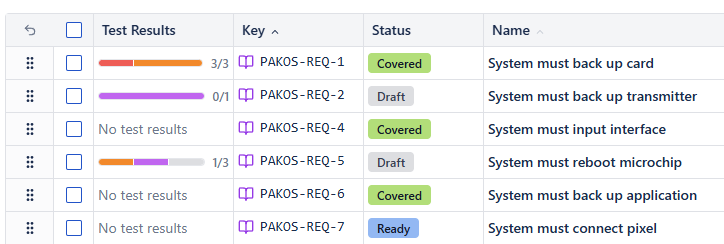
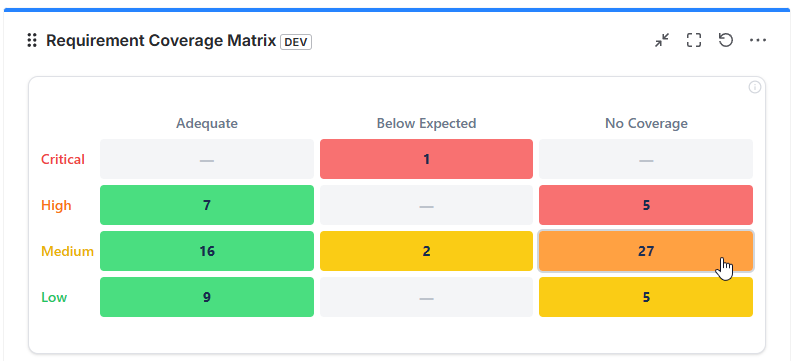
In BesTest, every requirement is Covered, Partly covered or Not covered, based on its significance (development complexity x business impact) and the number of test cases linked to it - a Critical requirement needs more tests than a Low one. When you know better, you can override the decision. You can see at a glance which requirements have enough UAT coverage and which have gaps - no spreadsheet cross-referencing needed.
Review and Approval Before Execution
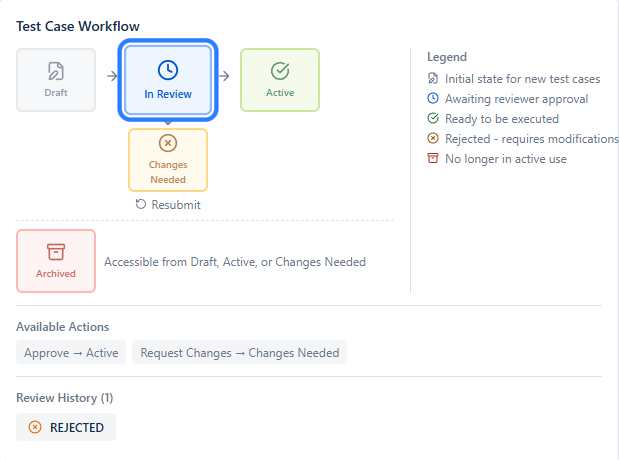
Section 2 of the template asks for test cases "reviewed and approved by business stakeholders". BesTest does that in the app, for test cases and for requirements: send an item to one or more reviewers with a note and a due date, and each reviewer approves it or requests changes. Every round is kept as a review audit trail, so "who approved this test, and when" has an answer.
Smart Collections for UAT Organization
A Smart Collection builds its list of test cases from rules instead of hand-picking: a folder rule such as "everything in the UAT folder", or a condition on a field you add yourself (for example a custom select field "Test level = UAT"). Its Requirements tab pulls in the test cases linked to the requirements you choose, such as everything in scope for Release 3.2. The collection is evaluated each time you add it to a cycle, so test cases written after the plan was approved are picked up automatically.
In-App Notifications Keep Business Users on Track
Business testers get an in-app notification when test runs are assigned to them and the cycle is ready to execute, reviewers when a test case or requirement waits on their approval, and anyone @mentioned in a comment. No one needs to check a spreadsheet or ask "is it my turn yet?"
What About the Template Sections?
Here's how each section of the template maps to BesTest:
| Template Section | BesTest Equivalent |
|---|---|
| Scope and Objectives | Requirements (acceptance criteria in the description), approved through review |
| Entry/Exit Criteria | Defined in your team's process (reference them in the cycle description) |
| Test Environment | Documented in the cycle description or the test case preconditions |
| Schedule | Test cycle start and end dates |
| Roles and Responsibilities | Testers assigned per test case on the cycle's Planning tab |
| Test Case Summary | Test cases with priorities, linked to the requirements they verify |
| Execution rounds and re-tests | Reruns in the Test Player; a Done cycle reopens when you add test work and closes again when every run has a result |
| Defect Management | Jira bugs created from the Test Player, pre-filled with the test case, step, and expected vs. actual result, and linked back to the run |
| Sign-Off | Not a BesTest feature: the release decision stays with your stakeholders. Attach the Test Execution Results report (PDF export) as evidence |
BesTest is free for up to 10 users and takes about a minute to enable on a Jira project. Want to see it first? The live demo runs the real app on sample data - no signup, no Jira install - so you can run a test case in the Test Player before you plan your next UAT cycle around it.
References
- •ISTQB Foundation Level Syllabus v4.0, 2023 - Section 2.4 covers acceptance testing as a distinct test level, including UAT objectives, test basis, and typical defects found during acceptance testing.
- •IEEE 829-2008, "Standard for Software and System Test Documentation" - Provides the industry-standard template structure for test plans, including the sections and fields used in the template above.
- •ISO/IEC/IEEE 29119-3:2021, "Software and Systems Engineering - Software Testing - Part 3: Test Documentation" - The updated international standard for test documentation, covering test plan content and structure applicable to UAT.
- •PMI, "A Guide to the Project Management Body of Knowledge (PMBOK Guide)" - Seventh Edition, 2021 - Section on quality management and acceptance criteria, relevant to formal UAT sign-off processes.
- •NIST, "The Economic Impacts of Inadequate Infrastructure for Software Testing," Planning Report 02-3, May 2002 - Documents the cost multiplier of post-release defects, reinforcing the value of structured UAT before production deployment.
Frequently Asked Questions
What should a UAT test plan include?
A UAT test plan should include: plan overview (project, scope, objectives), entry and exit criteria, test environment details, schedule and timeline, roles and responsibilities, a test case summary with priorities, defect management process, and sign-off criteria. The plan should be written in business language since UAT testers are typically stakeholders, not QA engineers.
Who is responsible for creating the UAT test plan?
The QA lead typically creates the UAT test plan, but business stakeholders must provide input on acceptance criteria, scope, and priorities. The product owner usually defines what "done" looks like from a business perspective, while the QA team structures that into a testable plan. Stakeholders should review and approve the plan before execution begins.
How long should UAT testing take?
UAT typically takes 5 to 15 business days depending on scope. Small releases with 20-30 test cases can complete in one week. Larger releases with 50-100+ test cases usually need two weeks, including time for defect triage, fixes, and re-testing. Always build in 2-3 buffer days for unexpected issues. The biggest time risk is business tester availability, so schedule dedicated testing sessions.
What is the difference between a UAT test plan and a UAT test case?
A UAT test plan is the overall strategy document that defines scope, schedule, roles, and processes for the entire UAT effort. A UAT test case is an individual scenario that a tester executes - with specific steps, expected results, and pass/fail criteria. The test plan contains or references many test cases. Think of the plan as the "how we will run UAT" and test cases as the "what we will actually test."
Can I use a UAT test plan template for Agile projects?
Yes, but scale it down. In Agile, UAT typically happens within each sprint rather than as a big-bang phase at the end. Use the same template structure but focus on the current sprint's user stories, shorten the schedule to 3-5 days, and keep the test case count manageable. The entry/exit criteria and sign-off sections are still valuable even in a sprint-based workflow.
How do I track UAT test plan progress in Jira?
Native Jira has no built-in UAT tracking. Most teams either use spreadsheets alongside Jira (which creates sync issues) or use a Jira test management plugin like BesTest that provides test cycles, execution tracking, and dashboard gadgets. With BesTest, you can see real-time pass/fail/blocked status, coverage against requirements, and defect counts directly in your Jira dashboard - free for up to 10 users.
How do I write a UAT test plan?
Start before development finishes, not after. (1) Define scope and objectives - the features and user journeys UAT will cover. (2) Set entry and exit criteria so everyone knows when UAT can begin and when it is done. (3) Identify your business testers and book their time. (4) Write test cases in plain business language straight from the acceptance criteria. (5) Pick a dedicated UAT environment and freeze it. (6) Define defect severity levels and the sign-off process. The template at the top of this page gives you every section in skeleton form - work through it top to bottom and you have a complete plan.
Is there a Word or Excel version of this UAT test plan template?
The template at the top of this page is plain text, so you can copy it straight into Word, Google Docs, Confluence, or a spreadsheet - the headings and tables map cleanly to any format. Word and Confluence suit the plan narrative (scope, criteria, sign-off), while Excel works well for the test case summary and results tracking. The catch with static files is that they stop keeping up once several testers are running tests at once, which is why teams doing UAT in Jira usually keep the document for reference but move the live tracking into a tool like BesTest.
Is there a filled-in UAT test plan example I can look at?
Yes - right after the template and the section-by-section guidance, this page includes a complete worked example for a fictional release (Horizon Billing Module v3.2) with a real schedule, named roles, example test cases, severity definitions, and a sign-off table. Read it to see how a finished UAT test plan reads, then replace the example values with your own project details.
The plan is written. Now it has to survive contact with testers.
Sections 7 and 8 - test cases and defect management - are where a Word document stops helping, because both change daily once UAT starts. BesTest runs exactly those two sections live in Jira: testers work through steps one at a time, defects link back to the plan that produced them, and progress updates itself instead of waiting for a Friday status call. Free for up to 10 users, about a minute to switch on.
View on the Atlassian Marketplace
Balázs Szakál
Founder & QA Lead at BesTest
Founder of BesTest and QA professional with extensive experience in software testing, test management, and Jira administration. Built BesTest to give testing teams complete visibility from requirements to release.
More about the team →